Enterprise WordPress migration
Turn a large redesign into a sequence of controlled releases.
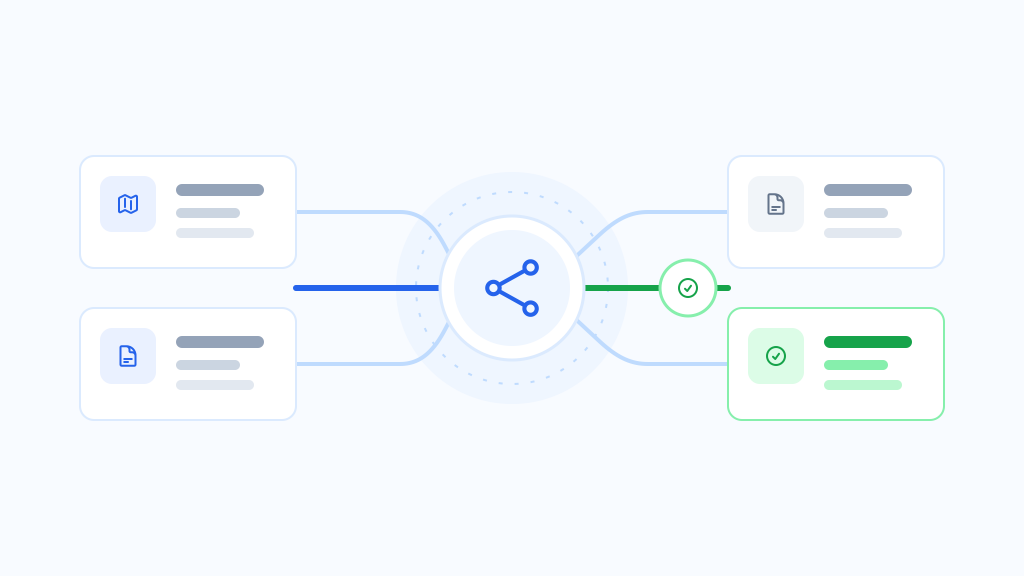
Move one content family at a time, review the assigned theme against current content, and preserve the active-theme fallback for every section that is not ready.
Section-level releases
Private route preview
Pause and fallback controls
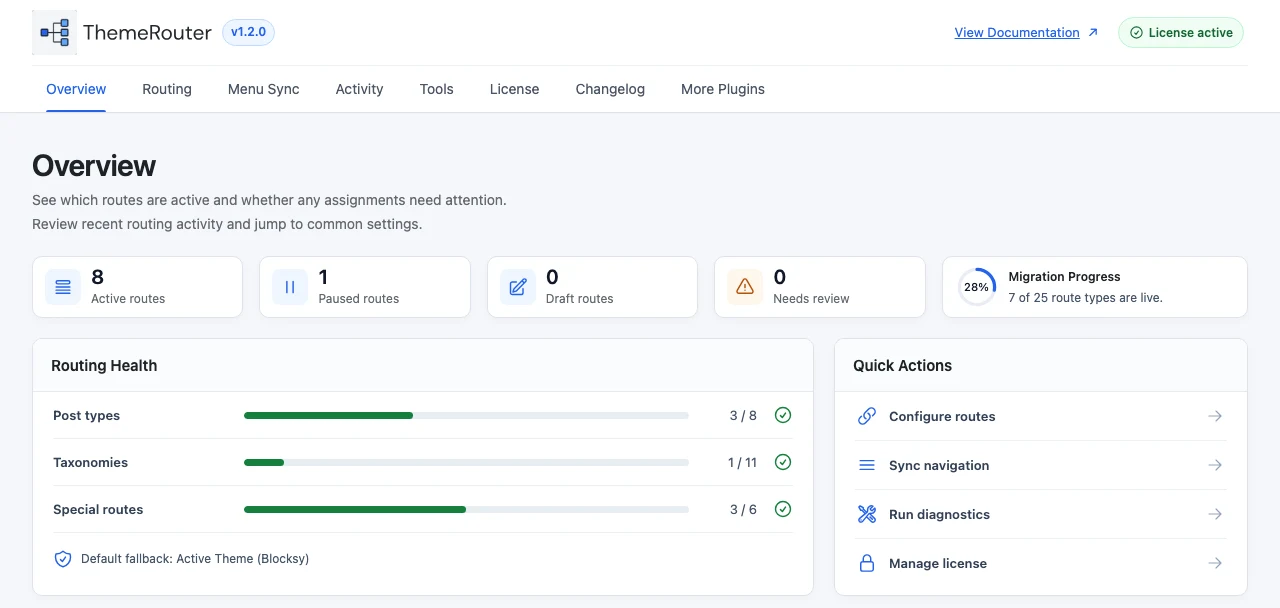
Enterprise complexity makes a single cutover difficult to reason about.
Full-platform switch
- Hundreds of templates and dependencies change together
- Staging cannot reproduce every production edge case
- SEO and performance shifts are hard to isolate
- Rollback reverses the complete redesign
Route-based enterprise release
- Each release has a contained content boundary
- Authorized users preview the assigned theme before enablement
- Existing monitoring remains the source for business and technical metrics
- Pause the assignment to return that route to the active theme
Enterprise rollout plan
Organize the migration around measurable content domains.
Give every route its own readiness criteria, validation window, and rollback decision.
1
Map content domains
Group the platform into content families with clear ownership and risk.
2
Choose a representative route
Start where the new theme can encounter meaningful production variation.
3
Run a validation window
Track route-specific SEO, performance, errors, and user outcomes.
4
Promote the next domain
Expand only after the release criteria are met and stakeholders agree.
Release portfolio
Sequence routes by value, dependency, and blast radius.
A content-heavy route can produce useful evidence before business-critical workflows move.
/case-studies/*High content value, limited operational dependency
Release 1
/resources/*Search, taxonomy, and archive validation
Release 2
Business-critical areasCurrent Theme until dependencies pass
Later
Evidence for every release decision
SEO continuity
Indexation, metadata, canonical behavior, and route-level organic traffic remain healthy.
Performance stability
Rendering time, Core Web Vitals, error rates, and capacity stay within release thresholds.
Operational readiness
Owners, support teams, analytics, and rollback responsibilities are clear before expansion.
Enterprise migration questions
Yes. Route definitions can match separate content areas to the theme appropriate for that release.
Only matched routes change. Every unmatched request continues through the established theme.
Yes. Routes are controlled independently, so rollback does not need to reverse previously validated sections.