Large content site migration
Modernize a high-volume content site without moving every template at once.
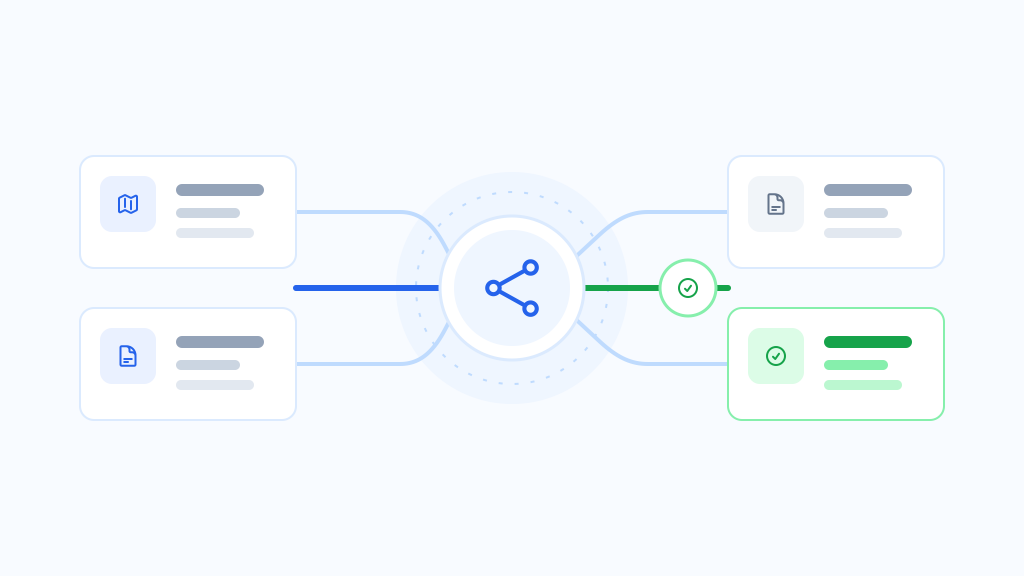
Route one content family to the new theme, validate its single, archive, taxonomy, and search experiences, then expand while unmatched content remains on the active theme.
Content-family rollout
External SEO validation
Pause and fallback controls

A content migration becomes risky when every model and dependency moves together.
All-at-once content migration
- Singles, archives, taxonomies, and search change together
- Editorial teams learn every new template in one release
- Organic traffic shifts are difficult to attribute
- Rollback reverses the entire content redesign
Route-based content rollout
- One complete content family moves at a time
- Editors validate real publishing workflows
- Your existing SEO systems measure discovery changes
- Pause only the affected content assignments
Content migration workflow
Expand by content dependency, not by raw page count.
Treat each model as a complete visitor and editorial experience before routing the next one.
1
Inventory content models
Map singles, archives, taxonomies, search, feeds, and editorial dependencies.
2
Choose one complete family
Start with a bounded model that has representative content and measurable traffic.
3
Validate both audiences
Test visitor discovery and the editor workflow under production conditions.
4
Expand to the next dependency
Add the related content family only after routes and operations remain healthy.
Recommended sequence
Start with a coherent editorial journey.
A bounded guide or resource model exposes template, taxonomy, search, and publishing behavior without changing the full site.
/guides/*Single, archive, topic taxonomy, and search coverage
Start here
/resources/*Related downloads, filters, and editorial workflow
Next
/directory/*High-dependency listings and integrations
Later
Evidence that a content family is ready
Content-model coverage
Singles, archives, taxonomies, pagination, feeds, and empty states render correctly.
Discovery continuity
Internal links, canonical behavior, indexation, search, and organic landing traffic stay healthy.
Editorial readiness
Authors can create, preview, revise, publish, and recover content without workflow surprises.
Large content site migration questions
Usually, yes. Visitors move between singles, archives, taxonomy pages, and search, so the first rollout should validate the complete discovery journey.
Yes. Unmatched routes continue using the current theme until their content model and dependencies are ready.
Keep URLs stable, validate metadata and canonical behavior, monitor route-level organic traffic, and expand only after discovery signals remain healthy.